Costa Mesa ADUs and Second Units: What Adding a Door Really Does to Your Rental
The lot you already own may be the best acquisition available to you, but a second unit changes the management math in ways most Costa Mesa owners do not plan for until the first tenant moves in.
Real Property Management Optimal manages residential rental property in Costa Mesa, California, including single-family homes, condominiums, and properties with an accessory dwelling unit or second unit on the lot. We handle marketing, tenant screening, leasing, rent collection, maintenance coordination, inspections, and owner accounting for Costa Mesa owners, operating from an Aliso Viejo office that serves all of Orange County.
By Leo Stein, Owner, Real Property Management Optimal
Does adding a second unit in Costa Mesa actually pencil out?
Start with the honest version. An accessory dwelling unit is a construction project first and an income stream second, and the gap between those two facts is where owners get hurt. The construction cost is real and paid up front. The income arrives later, net of vacancy, maintenance, and management, and it arrives forever only if the unit is actually desirable.
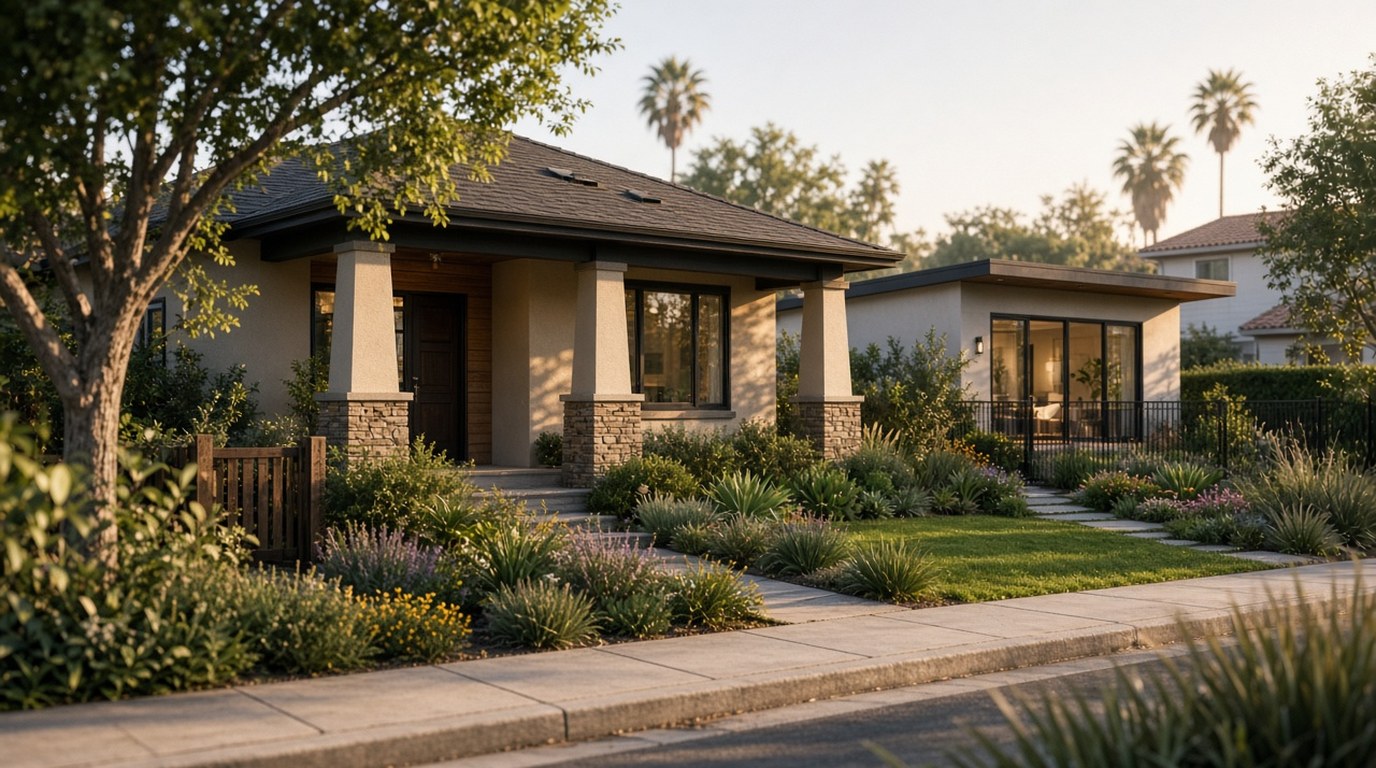
What makes Costa Mesa different from many Orange County cities is the raw material. A large share of the city's single-family inventory was built in the postwar decades on lots that are wider and deeper than what a newer master-planned neighborhood offers, often with a detached garage already sitting at the back of the property. California's statewide ADU legislation has substantially narrowed the ways a city can say no to a compliant second unit, which means the constraint in Costa Mesa is more often the lot, the budget, and the utilities than the entitlement.
The test we ask owners to run is not "can I build one." It is "what will this specific unit rent for, to whom, for how long, and what does it cost me to operate." If you cannot answer those four questions before you break ground, you are not evaluating an investment. You are hoping. A free rental evaluation answers the first two before you spend anything, which is why we suggest doing it at the sketch stage rather than at the certificate of occupancy.
What changes the day your property becomes two households?
The single-family rental is a clean arrangement. One lease, one household, one point of contact, one set of expectations about the yard and the driveway. Add a second unit and every one of those becomes a negotiation.
Parking is usually the first flashpoint. Costa Mesa's older streets were not built for the vehicle counts modern households carry, and if the lease does not assign parking explicitly, the two households will assign it themselves, badly. Utilities are the second. If the ADU is not separately metered, you are either estimating and allocating or you are absorbing, and both approaches have to be written down before anyone signs. Outdoor space is the third. Who uses the yard, who maintains it, and where the trash containers live are trivial questions that generate a remarkable share of the friction on two-unit properties.
None of this is a reason to skip the ADU. It is a reason to write the lease as a two-household document from the beginning. When we take on a Costa Mesa property with a second unit, the parking assignment, the utility allocation method, the shared-area rules, and the quiet-hours language are all handled at the lease stage rather than improvised in month four.
Eastside, Westside, or Mesa Verde: where does a second unit fit best?
Costa Mesa is not one market. Eastside Costa Mesa, the pocket between 17th Street and the Newport Beach line, draws renters who want walkability, older character homes, and proximity to the 17th Street corridor and Newport Harbor. Rents there reward charm and condition, and a well-designed detached ADU in an Eastside backyard has an obvious audience: a single professional or a couple who wants the neighborhood without the whole house.
The Westside has changed more than any part of the city over the past two decades, with the SoBeCa district, The LAB, and The CAMP anchoring a creative and small-business renter pool and older industrial-adjacent blocks converting to residential character. Second units on the Westside often serve younger renters and people working in the design, food, and retail economies clustered nearby.
Mesa Verde is the quieter, more traditional single-family neighborhood of the three, with larger lots and a family-oriented tenant profile served by Newport-Mesa Unified. Second units there tend to work best as genuinely private detached structures rather than garage conversions that share a wall with the main house, because the main-house renter is paying for the quiet.
Orange Coast College sits in the middle of the city, South Coast Plaza anchors the east end, and the 55 and 405 put most of the county within reach. Renter demand in Costa Mesa is broad, which is exactly why the unit has to be aimed at someone specific.
How do you lease a main house and an ADU without them fighting each other?
Two units on one lot succeed or fail on sequencing and documentation. This is the order we work in:
- Define each unit's target renter before marketing either one. The main house and the ADU are two different products, and they should be priced and photographed as two different products.
- Lease the main house first when possible. The larger unit carries the larger share of the income and has the smaller applicant pool, so it should not be waiting on the smaller unit.
- Assign parking in writing, by space, in both leases. Not "adequate parking." A specific space or spaces, named.
- Choose and document the utility method. Separately metered, sub-metered, or allocated by a stated formula, disclosed in the lease before signing.
- Draw the outdoor map. Which household uses which yard area, who maintains it, where containers are stored, and when they go to the curb.
- Stagger the lease end dates. Two vacancies at once on the same lot is a self-inflicted wound. Offset the terms so turnovers do not collide.
- Set one maintenance intake channel for both units. Shared systems mean a problem in one unit is often a problem in both, and you want it reported once, to one place.
- Inspect both units on the same cadence. Documented condition on both sides protects the deposits and the building.
What does a two-unit Costa Mesa property look like compared with a single lease?
- Income structure: Single-family rental: One rent, fully exposed to a single vacancy. Main house plus ADU: Two rents, so a vacancy in one unit does not zero out the property.
- Vacancy risk: Single-family rental: Concentrated. Main house plus ADU: Diversified, but occurring twice as often across the property.
- Leasing effort: Single-family rental: One marketing cycle. Main house plus ADU: Two distinct marketing cycles, ideally staggered.
- Tenant relationships: Single-family rental: One household. Main house plus ADU: Two households plus the relationship between them.
- Shared systems: Single-family rental: Not applicable. Main house plus ADU: Parking, utilities, yard, trash, and often sewer and water laterals.
- Maintenance profile: Single-family rental: One set of systems. Main house plus ADU: Two sets of interior systems, one shared exterior and grounds.
- Compliance surface: Single-family rental: Standard California disclosures. Main house plus ADU: Standard disclosures per unit, plus a more involved Tenant Protection Act analysis for the property.
- Exit flexibility: Single-family rental: Sell to owner-occupant or investor. Main house plus ADU: Broader investor appeal, narrower owner-occupant pool.
Who actually rents in Costa Mesa, and what do they want?
Costa Mesa's renter base is unusually varied for a city of its size, and that is a durable feature rather than a trend. The city sits between Newport Beach and the 405, holds a large employment base of its own, and contains Orange Coast College. The result is a mix of early-career professionals, service and hospitality workers tied to South Coast Plaza and the 17th Street and Westside food and retail corridors, creative and design professionals, students, and long-tenured families in the more established neighborhoods.
What that mix means practically is that condition and presentation move rent more than square footage does in Costa Mesa. A compact, well-finished ADU with real storage, a functional kitchen, good light, and a defined parking space will outperform a larger unit that feels like a converted garage. Renters here are comparing your unit against genuinely good small housing, and they will pay for design and pass on compromise.
It also means seasonality is milder here than in a school-calendar-dominated city. Costa Mesa leases reasonably well year round, which gives owners more freedom to stagger lease terms across a two-unit property rather than forcing every expiration into summer.
What California rules apply once you have a second unit?
Two areas deserve attention, and both should be confirmed with a qualified professional rather than a blog post. This section is general education and not legal advice.
First, the Tenant Protection Act. California's AB 1482 establishes statewide limits on rent increases and just-cause requirements for covered residential tenancies, with exemptions that depend on factors including property type, construction, and ownership. Some single-family and condominium properties fall outside the statute when specific conditions are met, and adding a second unit to a lot can change how that analysis comes out. Do not assume the exemption you relied on last year still applies after the ADU exists.
Second, per-unit obligations. Every tenancy carries its own disclosure package, its own habitability duties, its own deposit accounting, and its own notice requirements. Two units means two of everything, running on separate timelines. That is administrative rather than difficult, but it is exactly the kind of administrative work that gets skipped by a busy owner and then surfaces at the worst moment.
Verify current requirements with the California Civil Code, the City of Costa Mesa for anything local, and a California landlord-tenant attorney for your specific property.
Why Owners in Costa Mesa Work With RPM Optimal
Two units on one lot is the point where self-management stops being a weekend task. Real Property Management Optimal runs Costa Mesa properties as complete operations: separate marketing and pricing for each unit, one consistent written screening standard applied to every applicant, leases that address parking, utilities, and shared space before anyone moves in, staggered term structures so turnovers do not collide, coordinated maintenance through vetted local vendors, documented inspections, and clean owner statements.
Leo Stein built the company around the idea that a rental property is an asset under stewardship, not a set of chores. Owners in Eastside, Mesa Verde, the Westside, and throughout Costa Mesa work with us because the second unit they built to create income actually creates income instead of creating a second job. Our office is in Aliso Viejo and we manage residential property across all 34 Orange County cities.
Get a free rental evaluation in Costa Mesa
Before you finalize an ADU design or sign a lease on a Costa Mesa property, find out what the units should actually rent for. Real Property Management Optimal provides a free rental evaluation that tells you what your property, or your planned second unit, realistically commands in today's Costa Mesa market.
Weighing whether to build, hold, or sell? Use our free Wealth Optimizer under Investor Resources. Enter the address and see how renting compares with selling for your specific property.
Call (949) 391-1019 or request your free rental evaluation online.
About the author
Leo Stein, Owner, Real Property Management Optimal Leo Stein founded Real Property Management Optimal to deliver something more than a termites, toilets, and tenants rent collector. His background includes performing audits for state and federal authorities, and he brings that same scrutiny to leases, vendor work, and owner reporting. In his words, he knows where the landmines lie. Leo describes the job as being handed the keys to someone's car that happens to be a house, and he treats each property accordingly. Real Property Management Optimal is based in Aliso Viejo, is part of the Real Property Management and Neighborly network, and manages residential rental property in Costa Mesa and all 34 Orange County cities.